Choosing the Right Aluminum Foil Roll Sizes for Your Market
Choosing the right aluminum foil roll size involves more than deciding how many meters of foil a roll should contain. Roll width, thickness, material weight, core weight, and packaging all affect the final product.
For importers, wholesalers, supermarket buyers, and food service suppliers, selecting suitable specifications is important for controlling costs and meeting local market demand.
Aluminum foil rolls are available in various lengths and widths, ranging from small household foil rolls to large commercial foil rolls. Understanding the differences between these specifications can help buyers make more informed purchasing decisions.
1. Aluminum Foil Roll Solutions for Global Markets
Aluminum foil rolls are commonly sold by length or total surface area, depending on the market.
In Europe, the Middle East, and many other regions, roll lengths are usually expressed in meters. In North America, square feet are commonly used to describe household foil products.
The following table shows some commonly used sizes:
|
Market |
Popular Foil Width |
Popular Foil Length |
Popular Foil Thickness |
|
United Kingdom |
45cm |
75m, 100m |
15microns, 18microns, 20microns |
|
Europe |
30cm, 45cm |
30m, 50m, 100m |
18microns, 20microns, 22microns |
|
Middle East |
30cm |
20m, 30m, 60m |
10microns, 12microns, 15microns |
|
Africa |
30cm |
10m, 20m, 50m, 60m, 100m |
9microns, 12microns, 15microns |
|
North America |
30cm, 45cm |
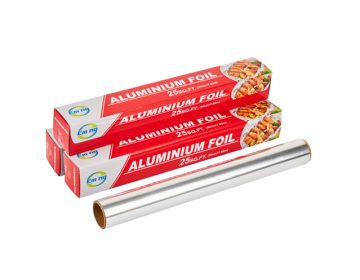
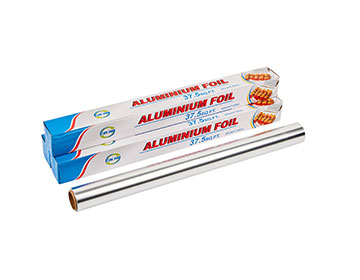
25sqft, 37.5sqft, 500sqft, 1000sqft |
12microns, 15microns, 18microns, |
Understanding local buying habits allows importers and retailers to select products that better meet customer demand.
2. Standard Aluminum Foil Roll Specifications
When selecting aluminum foil rolls, buyers usually evaluate several specifications rather than roll length alone.
|
Specification |
Typical Options |
|
Roll Length |
10 m – 300 m |
|
Roll Width |
300 mm – 600 mm |
|
Foil Thickness |
9–25 microns |
|
Core Weight |
20g,30g,40g 50g,80g,100g or Customized |
|
Alloy |
8011, 3003 |
|
Packaging |
Color box, shrink wrap, carton, OEM |
Not every combination is suitable for every application. For example, a household retail roll may require compact packaging and a convenient length, while a catering roll generally prioritizes larger capacity and ease of use.
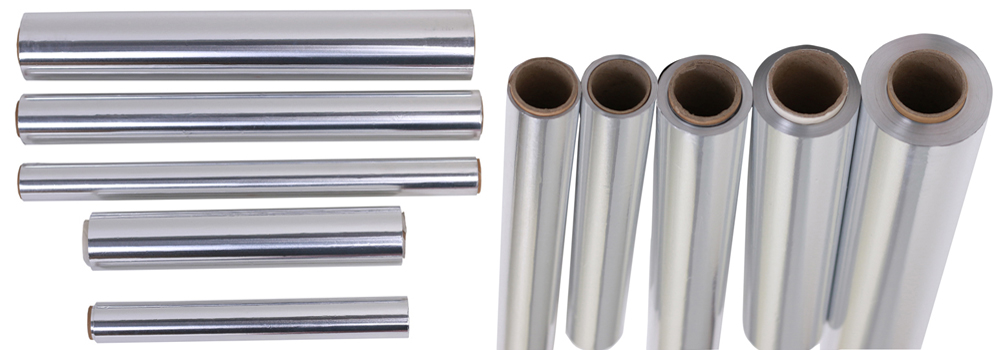
Roll Length and Width
Roll length determines how much foil is available, while width determines the size of the foil sheet when it is unrolled.
Common widths include 300 mm, 350 mm, 400 mm, and 450 mm.
● 300 mm: Suitable for smaller food items and general household use.
● 350 mm: A practical option for everyday cooking and wrapping.
● 400 mm: Suitable for larger dishes and baking applications.
● 450 mm: Often selected for catering and larger food preparation tasks.
The appropriate width depends on the size of the food, trays, and containers being used.
Foil Thickness
Thickness is another important factor when selecting aluminum foil rolls.
Common household and commercial specifications range from approximately 9 to 25 microns.
| Thickness | General Characteristics | Typical Applications |
|---|---|---|
| 9–10 μm | Thin and lightweight | General household wrapping |
| 11–12 μm | Moderate flexibility | Cooking and food covering |
| 13–15 μm | More substantial handling feel | Baking and regular food service |
| 16–20 μm | Greater resistance to handling and tearing | Heavy-duty household and catering use |
| 21–25 μm | Thicker material | Specialized commercial applications |
These are general selection references, not universal performance classifications. Actual performance also depends on alloy, temper, production quality, and application.
For buyers comparing suppliers, checking the actual thickness is more useful than relying only on descriptions such as standard duty or heavy duty.
3. How to Choose the Right Aluminum Foil Roll Length
The ideal roll length depends largely on how frequently the product will be used.
Household Use
Household consumers generally prefer rolls that are easy to handle and store.
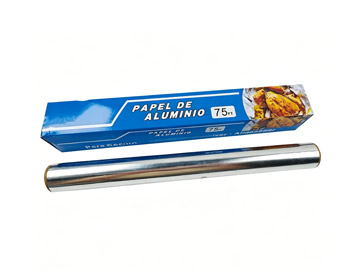
Common options include 10 m, 20 m, 30 m, 50 m, and 75 m. Smaller rolls may suit occasional users, while longer rolls are often more practical for families that cook regularly.
Supermarkets and Retail Chains
Retail buyers usually need to balance product price, shelf space, and consumer convenience.
Roll lengths such as 30 m, 50 m, 60 m, and 75 m can be considered for different price segments.
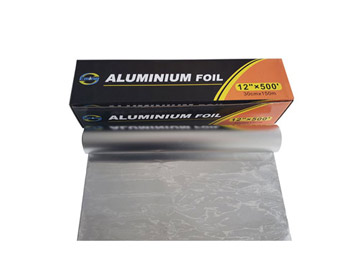
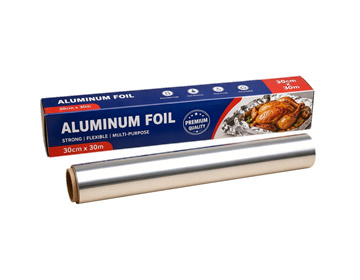
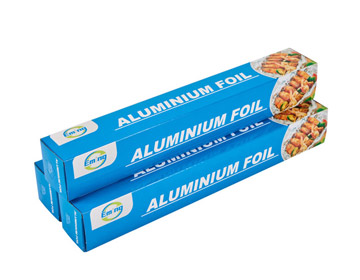
Packaging also matters. A compact color box may be suitable for supermarket shelves, while printed branding and clear specification information help consumers compare products.
Restaurants and Catering Businesses
Restaurants and catering operations generally consume foil more frequently than households.
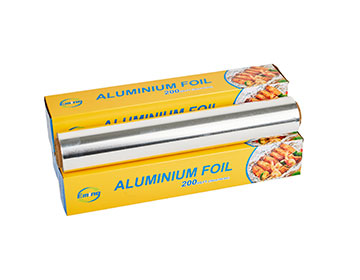
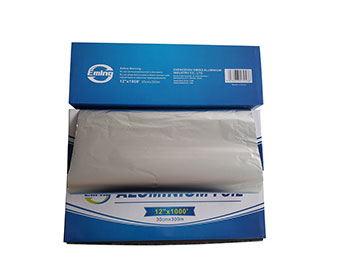
Longer rolls, such as 100 m, 150 m, and 300 m, can reduce the frequency of roll replacement.
For these applications, buyers should also consider foil thickness and width. A longer roll is not necessarily the most economical option if the foil is too thin or unsuitable for the intended task.
Food Processing
Food processing companies may require larger rolls, specific widths, and consistent material properties.
The specifications are usually determined by the processing equipment, packaging process, and type of food being handled.
For industrial buyers, roll dimensions and material consistency are often more important than retail packaging.
4. How Aluminum Foil Thickness Affects Roll Weight
When comparing aluminum foil products, it is important to look beyond the roll length.
A longer roll does not always contain more aluminum if its width or thickness is smaller.
The approximate aluminum weight can be calculated using:
Aluminum weight (kg) = Length (m) × Width (m) × Thickness (μm) × 0.0027
For example, consider a roll with the following specifications:
● Length: 30 m
● Width: 300 mm (0.3 m)
● Thickness: 12 μm
The approximate aluminum weight is:
30 × 0.3 × 12 × 0.0027 = 0.2916 kg
This means the roll contains approximately 292 g of aluminum foil, excluding the paper core and outer packaging.
This calculation is useful when comparing products from different suppliers. Buyers can use it to check whether the stated roll length, width, and thickness are consistent with the declared net material weight.
Actual weight may vary slightly due to production tolerances.
5. Understanding Core Weight and Packaging
The paper core is another factor that affects the total weight of an aluminum foil roll.
Common core weights include 20 g, 30 g, 40 g, 50 g, 80 g, 100 g, and 120 g.
A heavier core may provide additional rigidity, but it also increases the gross weight of the finished product.
When comparing quotations, buyers should distinguish between:
● Aluminum foil net weight
● Paper core weight
● Individual retail packaging weight
● Total carton weight
These figures should not be treated as interchangeable.
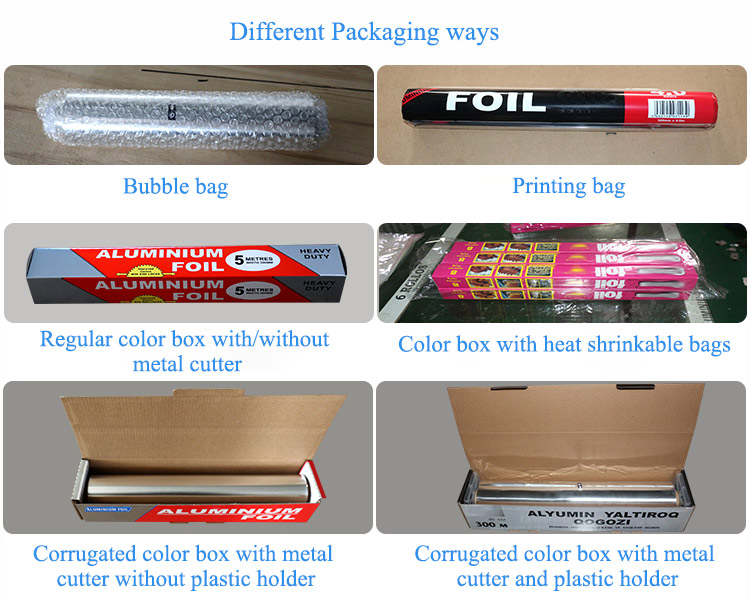
Packaging also varies according to the sales channel. Household products commonly use printed color boxes, while commercial rolls may use shrink wrapping or bulk cartons.
For private-label products, packaging dimensions should be checked together with the roll diameter to ensure the finished product fits the intended retail or shipping carton.
Conclusion
Selecting the right aluminum foil roll size requires considering length, width, thickness, core weight, and packaging together.
Household retail products generally focus on convenient roll lengths and practical packaging, while catering and industrial applications often require longer rolls and more specific material specifications.
For importers and distributors, understanding these differences is an important step in developing products that match local demand and maintaining a competitive purchasing cost.
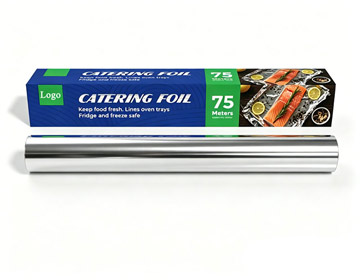
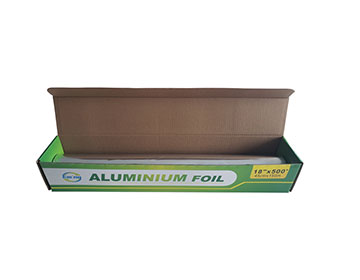
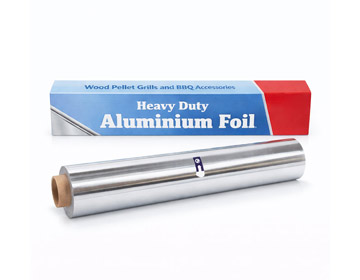
Manufacturers such as Zhengzhou Eming Aluminium Industry Co., Ltd. offer household foil, catering foil, and heavy-duty aluminum foil in different specifications, with customized roll dimensions and packaging available according to project requirements.
Whether you are developing a supermarket brand, sourcing products for wholesale distribution, or looking for a reliable long-term manufacturing partner, our experienced team is ready to support your business.
Contact us today to request a quotation, product catalog, or free samples.
WhatsApp: +8619138193376
Email: eming@emingfoil.com
Related Products