Wholesale Foil Containers With Lids: Sizes, Specifications and Buying Guide
Wholesale foil containers with lids are widely used in foodservice, takeaway packaging, bakeries, catering operations and prepared-meal distribution. For importers and food packaging distributors, selecting the right container involves more than comparing unit prices. Capacity, dimensions, lid compatibility, carton packing and minimum order quantities all affect purchasing decisions.
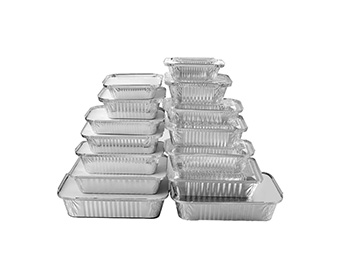
Different food applications require different packaging formats. Small foil trays are commonly used for individual portions and desserts, while larger containers are suitable for takeaway meals, bakery products and catering orders.
Zhengzhou Eming Aluminium Industry Co., Ltd. manufactures disposable aluminum foil containers and household aluminum foil products for wholesale and international markets. This guide covers common container sizes, available lid options and important specifications to check when sourcing foil containers in bulk.
1. Common Aluminum Foil Container Sizes and Specifications
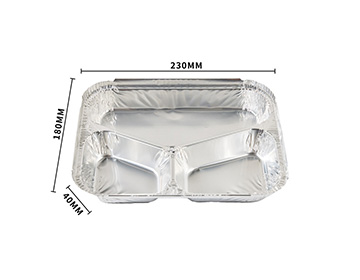
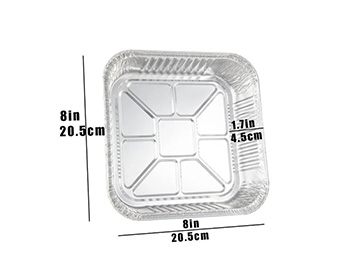
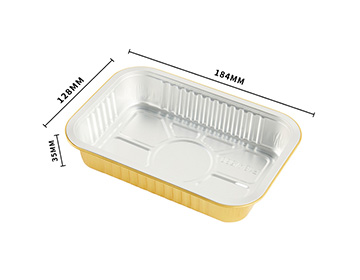
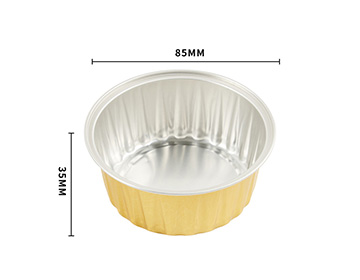
Aluminum foil containers are available in various shapes and sizes to accommodate different food portions and packaging requirements.
When comparing models, buyers should pay attention to three main specifications:
-
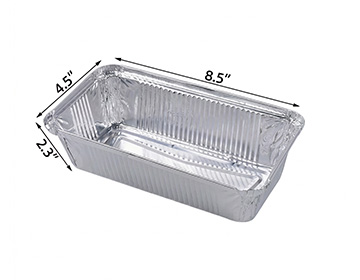
Dimensions: Determine whether the container fits the intended food portion and packaging requirements.
-
Capacity: Indicates the approximate volume the container can hold.
-
Material weight: Affects container rigidity, handling performance and material consumption.
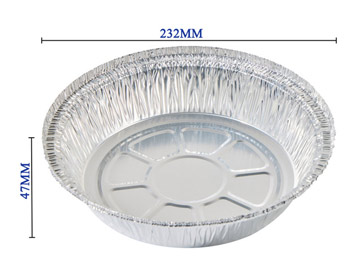
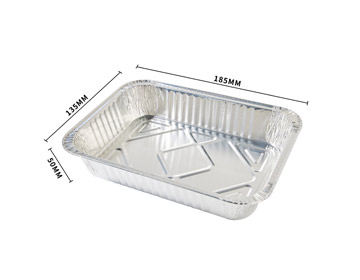
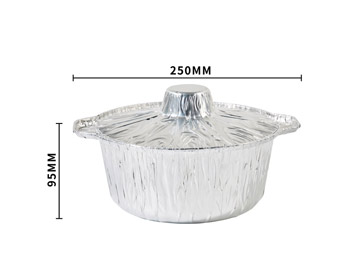
Below are some commonly available aluminum foil container models for wholesale purchasing.
|
Item |
Size |
Weight |
Capacity |
MOQ |
PCS/CTN |
Lid |
|
RE130 |
130*100*38mm |
3g/3.8g |
260ml |
100,000 |
1000 |
Paper lid/Plastic lid |
|
RE150 |
150*120*45mm |
5g/5.5g/6.8g/7.3g/8g |
450ml |
100,000 |
1000 |
Paper lid/Plastic lid |
|
RE185 |
185*135*50mm |
7.8g/8g/10g/10.6g |
700ml |
100,000 |
1000 |
Paper lid/Plastic lid |
|
RE210 |
210*142*42mm |
6g/8g |
800ml |
100,000 |
1000 |
Paper lid/Plastic lid |
|
RE255 |
255*190*58mm |
17g |
1750ml |
50,000 |
500 |
Paper lid/Plastic lid |
|
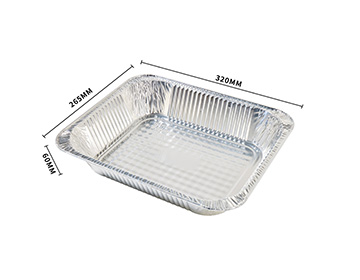
RE320D |
320*265*60mm |
31g/33g/38g |
3500ml |
10,000 |
100 |
Plastic lid/Foil lid |
|
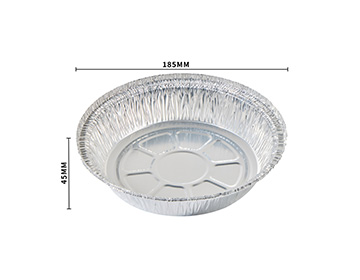
R8’’ |
Φ215mm*43mm |
11g |
880ml |
50,000 |
500 |
Paper lid/Plastic lid |
|
SQ230 |
230*230*47mm |
17g/19g/20.5g |
1650ml |
100,000 |
1000 |
Paper lid/Plastic lid |
|
P430 |
430*288*21mm |
37g |
1400ml |
5,000 |
50 |
/ |
|
T470 |
470*345*84mm |
75g |
6800ml |
5,000 |
50 |
Plastic lid |
|
RE525D |
525*328*76mm |
100g/110g/120g |
9700ml |
5,000 |
50 |
Plastic lid/Foil lid |
|
POT292 |
Φ292mm*120mm |
49.5g |
3500ml |
10,000 |
100 |
Foil lid |
Before confirming an order, you should verify the actual usable capacity, lid fit, carton specifications and MOQ for each model. These details help you compare landed costs and determine which container sizes best match your customers’ needs.
2. How to Select the Right Container Size
The best container size depends on the type of food, serving portion and packaging requirements.
Here are some general considerations:
-
Small containers (260–450ml): Suitable for sauces, side dishes, small desserts and individual food portions.
-
Medium containers (700–880ml): Commonly considered for takeaway meals, baked dishes and individual main courses.
-
Large containers (1,400–1,750ml): Suitable for larger meal portions, family-size dishes and bakery applications.
-
Extra-large containers (3,500–6,800ml): Designed for catering, bulk food preparation and larger foodservice requirements.
These are general application references rather than fixed serving-size recommendations. Actual suitability depends on food density, portion size and container shape.
For buyers comparing different models, it is also important to check the relationship between container weight and rigidity. Two containers with similar dimensions may have different material weights and structural performance.
3. How to Choose the Right Lid for Aluminum Foil Containers
The lid is an important part of an aluminum foil food packaging system. The right lid helps protect food during storage, handling and transportation while providing a suitable packaging appearance.
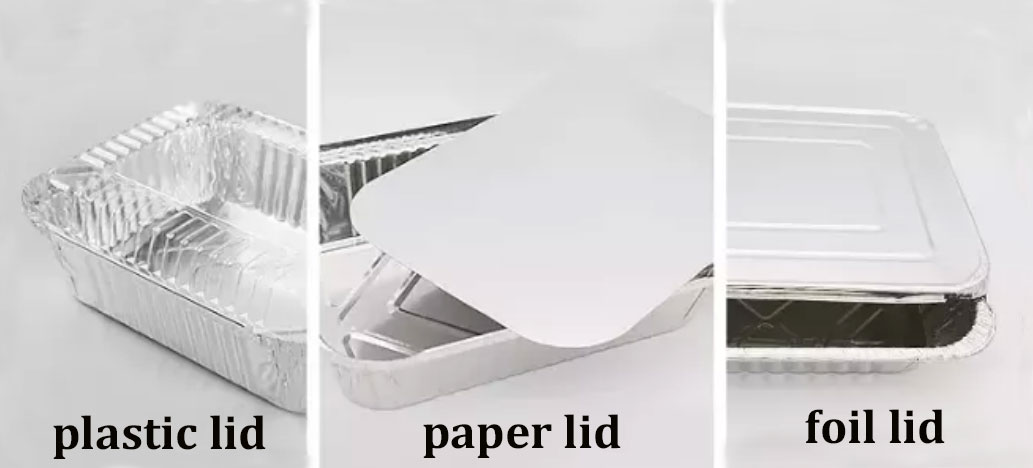
Depending on the container design, common lid options include plastic lids, paper lids and aluminum foil lids.
Plastic Lids
Plastic lids are often selected when food visibility is important. Transparent lids allow customers to see the packaged food without opening the container.
They are commonly considered for takeaway meals, bakery products, prepared foods and retail food packaging.
Before purchasing, check the lid material, dimensions, closing mechanism and applicable temperature limitations. Not all plastic lids are suitable for oven use or hot-food applications.
Paper Lids
Paper lids are another option for food packaging systems where paper-based components are preferred.
When evaluating paper lids, buyers should consider:
-
Grease and oil resistance.
-
Moisture resistance.
-
Structural strength during handling.
-
Compatibility with the container rim.
-
Printing and customization requirements.
The actual performance depends on the paper structure, coating and manufacturing process.
Aluminum Foil Lids
Aluminum foil lids are suitable for packaging systems designed around foil covers or foil sealing applications.
They can be considered for prepared meals, bakery products and food packaging that requires an aluminum-based closure.
Buyers should confirm whether the selected lid is designed for manual fitting, crimping or heat-sealing equipment. Equipment compatibility and sealing requirements should be checked before placing a bulk order.
4. Applications of Aluminum Foil Containers With Lids
Aluminum foil containers are used across several foodservice and retail sectors because they are available in different shapes, capacities and material weights.
Their applications vary according to container design and the specifications of the complete packaging system.
Restaurants and Takeaway Businesses
Restaurants use foil containers for takeaway meals, rice dishes, pasta, roasted food and prepared portions.
Matching lids help cover the food during handling and delivery. For liquid or oily foods, buyers should pay particular attention to lid fit and leakage performance.
Bakeries and Dessert Shops
Bakeries use aluminum foil trays for pies, tarts, cakes and other baked products.
Round and rectangular formats provide different presentation and portioning options. Certain foil containers can also be used for baking, subject to the manufacturer’s temperature and application specifications.
Catering and Foodservice Companies
Large-capacity foil containers are commonly used for buffet preparation, event catering, food storage and bulk meal distribution.
Models such as RE320D, T470, RE525D and POT292 offer larger capacities for applications requiring more food volume.
Supermarkets and Prepared-Meal Suppliers
Supermarkets and prepared-meal businesses use foil packaging for portioned meals, ready-to-cook products and food display.
The choice of lid depends on the product’s storage conditions, display requirements and packaging process.
For distributors, offering multiple sizes and lid combinations makes it easier to serve different customer groups with a broader product range.
5. Cost Considerations When Buying Aluminum Foil Containers Wholesale
Unit price is important, but it should not be the only factor when comparing wholesale aluminum foil container suppliers.
Several factors influence the total purchasing cost.
Container Weight and Material Specifications
Aluminum foil container weight directly affects material consumption. Containers with different weights may have different rigidity and application suitability, even when their dimensions are similar.
Buyers should compare products with equivalent dimensions, weights and performance requirements rather than choosing solely based on the lowest quoted price.
MOQ and Carton Quantities
Minimum order quantities vary between models.
For example, the listed MOQ for RE130, RE150 and RE185 is 100,000 pieces, while RE320D has a listed MOQ of 10,000 pieces.
Carton quantities also influence warehouse planning, transportation arrangements and inventory management.
Packaging and Shipping Costs
Because foil containers are lightweight, their shipping cost is not determined by weight alone. Carton dimensions, stacking arrangements, container quantities and shipping method can all affect transportation expenses.
Before confirming an order, request carton dimensions, gross weight and packing details to estimate the total landed cost.
Long-Term Supply Consistency
For distributors and importers, consistent product specifications are important for repeat orders.
Working with a manufacturer that can provide clear product specifications, production information and sample confirmation helps reduce purchasing uncertainty.
6. What Should You Check Before Placing a Wholesale Order
When comparing suppliers, review the following information:
1. Container dimensions, capacity and unit weight.
2. Compatible lid materials and available lid models.
3. Minimum order quantities and whether they apply per size or per order.
4. Units per carton, carton dimensions and gross weight.
5. Available customization and packaging options.
6. Sample availability, quality documentation and applicable food-contact compliance requirements.
7. Production lead time, shipping arrangements and quotation terms.
Comparing these details alongside the unit price provides a more useful basis for evaluating wholesale suppliers and planning repeat orders.
Contact Us to discuss your wholesale aluminum foil container requirements and request product specifications.
WhatApp: +8619138193376
Email: eming@emingfoil.com
Related Products