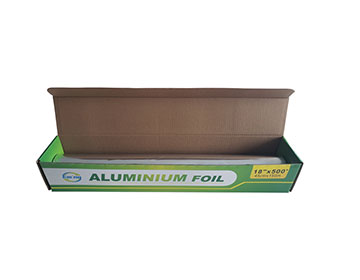
Why Are Some Aluminum Foil Roll Suppliers So Cheap? A Buyer’s Guide
When sourcing aluminum foil rolls, it is not unusual to receive quotations that differ significantly from one supplier to another. One manufacturer may offer a price that looks reasonable, while another claims to supply a similar product at a much lower cost.
At first glance, the cheaper option may seem like an easy choice. For importers, wholesalers, and distributors working with tight margins, even a small reduction in purchasing costs can make a difference.
But there is a question worth asking before placing an order: Are you comparing the same product, or simply comparing two different prices?
In the aluminum foil roll business, a low quotation does not always mean better production efficiency or a more competitive manufacturer. Sometimes, the difference comes from raw material choices, product specifications, packaging details, or the way the quotation is calculated.
Understanding these differences can help buyers avoid costly surprises, protect their customers’ trust, and build a more sustainable business.
1. Lower Prices May Come from Different Raw Materials
Raw materials account for a significant part of the production cost of aluminum foil. When two suppliers offer noticeably different prices, the first thing worth checking is whether they are using comparable materials and manufacturing processes.
Is recycled aluminum being used?
Some low-cost suppliers may use recycled aluminum as a starting material and remelt or reprocess it to produce aluminum foil. Recycled aluminum can be a legitimate and valuable part of the aluminum industry. In fact, recycled aluminum is widely used in many applications, and recycling can reduce energy consumption and environmental impact.
However, recycled content alone does not tell you whether a foil roll is suitable for food packaging.
The important questions are how the material is processed, whether its composition and cleanliness are controlled, whether the foil meets the required specifications, and whether the finished product complies with applicable food-contact regulations.
Poorly controlled recycled feedstock or inadequate processing can introduce contamination risks or lead to inconsistent material properties. If a supplier cannot provide reliable quality documentation or explain its material controls, buyers should be cautious.
For aluminum foil intended for oven use, food contact, or other demanding applications, it is particularly important to verify that the finished foil is suitable for its intended purpose.
Why material quality matters in actual use
A roll of aluminum foil may look perfectly acceptable when you first open the carton. The differences often become apparent only after customers start using it.
Depending on the foil specification and manufacturing quality, problems may include:
● Foil that tears too easily during dispensing or wrapping.
● Inconsistent thickness that affects handling and performance.
● Pinholes or other defects that reduce the product’s reliability.
● Poor performance when wrapping food or using the foil under specified oven conditions.
● Inconsistent quality between production batches.
These problems can quickly become a commercial issue for importers. A distributor may save a small amount on the initial purchase but end up dealing with customer complaints, product returns, replacement costs, or damage to its brand reputation.
It is important not to assume that all recycled aluminum is inferior. A well-controlled product made with recycled content may perform perfectly well. What matters is whether the supplier can demonstrate consistent quality and compliance, rather than simply offering a low price.
A practical tip: Ask suppliers for the foil alloy, thickness, width, roll length, intended application, and relevant food-contact compliance documents. If a quotation is significantly cheaper than competing offers, ask the supplier to explain the difference.
2. The Paper Core Can Make a Roll Look Heavier Than It Really Is
Another issue that buyers sometimes overlook is the weight of the paper core inside an aluminum foil roll.
This is particularly important when purchasing household aluminum foil, catering foil, or other products sold by roll weight or with a specified roll length.
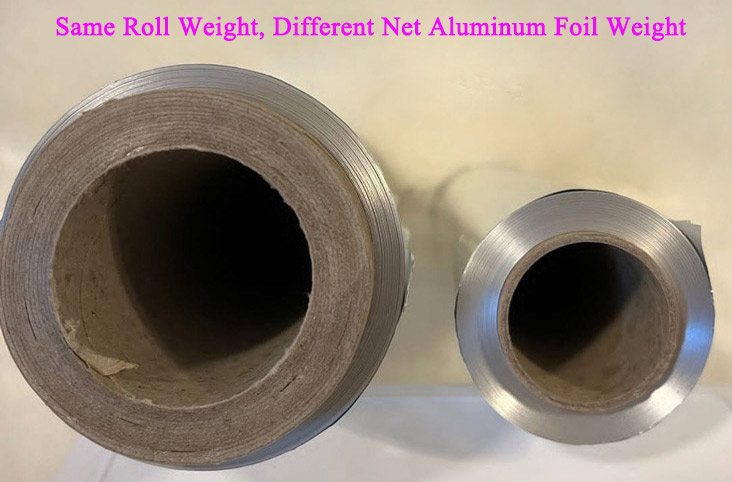
A finished foil roll is not made of aluminum alone. It usually includes the aluminum foil itself, a paper core, and sometimes additional packaging components. Depending on how the supplier presents the quotation, these weights may be combined or reported separately.
The problem arises when buyers compare total roll weight without checking how much of that weight is actually aluminum foil.
Total weight is not the same as net foil weight
Consider two suppliers offering aluminum foil rolls with the same stated gross product weight.
Supplier A uses a relatively light paper core and provides more aluminum foil per roll.
Supplier B uses a heavier paper core but supplies less aluminum foil.
If both suppliers quote only the overall roll weight, their products may appear equivalent. In reality, the second roll may contain less usable aluminum foil.
For example, consider the following simplified comparison. The figures are illustrative and do not represent any specific manufacturer’s products.
|
Item |
Supplier A |
Supplier B |
|
Total roll weight, excluding outer packaging |
1,000 g |
1,000 g |
|
Paper core weight |
100 g |
200 g |
|
Net aluminum foil weight |
900 g |
800 g |
Both rolls weigh 1,000 g in total, but Supplier B provides 100 g less aluminum foil per roll.
That is an 11.1% reduction in net foil weight compared with Supplier A.
If you order 10,000 rolls, the difference adds up to 1,000 kg of aluminum foil. This is no longer a minor detail; it can directly affect your product’s value, cost calculation, and ability to meet customer expectations.
Why would a supplier use a heavier paper core?
There can be legitimate reasons for choosing a particular core weight. A core may need sufficient strength to prevent deformation during production, transportation, storage, or dispensing.
However, if the core is unnecessarily heavy and its weight is not clearly disclosed, it becomes difficult for buyers to make a fair comparison.
Some quotations simply state the total roll weight, leaving the buyer to assume that the amount of aluminum foil is similar across suppliers. Whether intentional or not, this can make a product look more competitive than it really is.
The solution is straightforward: ask for the paper core weight and net aluminum foil weight separately.
3. A Lower Price Per Roll Does Not Necessarily Mean a Lower Cost Per Meter
Weight is only one part of the calculation. For many buyers, the actual usable length of each roll is equally important.
Suppose two suppliers offer aluminum foil rolls in the same width, with similar packaging and the same stated total weight. If one roll contains less aluminum foil, it will generally have a shorter length when the foil thickness and other relevant specifications are comparable.
This means that a buyer may pay less for each roll but receive less product in return.
To illustrate the point, imagine two suppliers quoting the following products:
|
Specification |
Supplier A |
Supplier B |
|
Foil width |
30 cm |
30 cm |
|
Foil thickness |
12 microns |
12 microns |
|
Net foil weight |
900 g |
800 g |
|
Quoted price per roll |
$2.00 |
$1.85 |
Supplier B appears to be 7.5% cheaper per roll. However, its net foil weight is 11.1% lower.
Assuming the same alloy density and comparable thickness, the approximate foil length is proportional to the net aluminum weight when the width and thickness are held constant.
Using net foil weight as a simplified comparison:
● Supplier A: $2.00 ÷ 900 g = approximately $0.00222 per gram of foil.
● Supplier B: $1.85 ÷ 800 g = approximately $0.00231 per gram of foil.
In this example, Supplier B is actually more expensive per gram of aluminum foil, despite offering a lower price per roll.
The same principle applies when comparing cost per meter, provided the foil width and thickness are also taken into account.
For importers selling to supermarkets, wholesalers, or retail customers, these differences matter. A product advertised as a certain length should consistently deliver that length. Otherwise, the short-term purchasing advantage may turn into a long-term commercial problem.
The lesson is simple: compare the amount of usable foil you receive, not just the price printed on the quotation.
4. Packaging Details Can Also Affect the Quoted Price
Packaging is another factor that can create misleading price comparisons.
An aluminum foil roll intended for retail sale may include an inner box, a printed color carton, a cutter edge, a paper core, and an outer shipping carton. The design and specifications of these components affect both the unit cost and the final shipping volume.
Two products may look similar in a supplier’s quotation but have very different packaging specifications.
For example, one supplier may quote a basic color box with minimal printing, while another includes a stronger carton with custom artwork and additional finishing. The second product may cost more for reasons unrelated to the foil itself.
The reverse can also happen. A supplier may quote a lower price by using thinner carton board, reducing packaging protection, or offering a different box size.
Why should buyers check the color box dimensions?
Color box dimensions affect more than appearance. They influence how many units fit into an outer carton, how efficiently the products can be loaded into a container, and how much warehouse space the finished goods occupy.
If the dimensions differ, the total landed cost may also change.
For private-label buyers, packaging details can be especially important because the product must match the approved artwork and retail requirements. A small change in box dimensions or structure may affect shelf presentation, carton packing, or barcode placement.
When requesting quotations, buyers should confirm:
● Color box length, width, and height.
● Paperboard type and thickness, where relevant.
● Printing requirements and artwork specifications.
● Whether a cutter edge is included.
● Number of rolls per inner box and outer carton.
● Outer carton dimensions and packing method.
● Gross weight and net weight per carton.
A lower price may be perfectly reasonable if the packaging specification is simpler. The important thing is to know exactly what is included before comparing offers.
5. What Should a Reliable Aluminum Foil Roll Quotation Include?
A quotation should do more than show a product name and a unit price. It should provide enough information for the buyer to understand what is being purchased and to compare it fairly with other offers.
If a supplier provides only a brief description such as “household aluminum foil roll, 30 cm, competitive price,” there is not enough information to make a reliable purchasing decision.
For a more meaningful comparison, ask each supplier to quote against the same specification.
Recommended quotation checklist
|
Item |
What buyers should confirm |
|
Aluminum foil alloy |
The specified alloy or material grade, where applicable |
|
Foil thickness |
Actual specified thickness in microns |
|
Foil width |
Width in millimeters or centimeters |
|
Foil length |
Specified length per roll |
|
Net foil weight |
Weight of the aluminum foil only |
|
Paper core weight |
Weight of the empty paper core |
|
Roll weight |
Clarify whether this includes the core |
|
Color box dimensions |
Length × width × height |
|
Color box specification |
Board type, printing, and finishing |
|
Cutter edge |
Included or excluded |
|
Rolls per carton |
Packing quantity |
|
Outer carton dimensions |
Length × width × height |
|
Carton weight |
Net and gross weight, clearly defined |
|
Food-contact compliance |
Applicable documentation for the destination market |
|
Price terms |
Currency, MOQ, Incoterm, and quotation validity |
Not every item will be equally important for every product. However, the more standardized your requirements are, the easier it becomes to identify meaningful price differences.
It is also worth checking how the supplier defines net weight and gross weight. In international trade, these terms can be used differently depending on whether the supplier is referring to the roll, inner packaging, or shipping carton.
For clarity, request separate figures for the aluminum foil itself, the paper core, and the packaging wherever practical.
6. How to Compare Quotations Fairly
When several suppliers are competing for the same order, it is tempting to put all the prices into a spreadsheet and sort them from lowest to highest.
That is a useful first step, but it should not be the final decision.
A better approach is to standardize the product specifications before comparing the prices.
Step 1: Send every supplier the same requirements
Specify the foil width, thickness, length, alloy or material requirements, core weight, box dimensions, and packing quantity.
If you require a particular food-contact standard or destination-market compliance documentation, include that in the inquiry as well.
This reduces the chance of receiving quotations based on different product specifications.
Step 2: Compare net foil weight and actual length
Do not assume that two rolls contain the same amount of foil simply because their total weights are similar.
Check the net foil weight and specified length. Where possible, ask the supplier to explain how the weight, thickness, width, and length relate to one another.
If the figures appear inconsistent, request clarification before placing the order.
Step 3: Check the packaging specification
Confirm whether the quoted price includes the same color box, cutter edge, inner packing, and outer carton.
For customized products, ensure that the supplier has quoted according to the correct artwork and packaging dimensions.
Step 4: Calculate the cost beyond the unit price
For importers, the relevant cost is not always the factory price per roll.
Freight, customs duties, taxes, inspection costs, damage rates, storage, and local delivery may all affect the final landed cost. Packaging dimensions and carton efficiency can influence shipping expenses, too.
A product that is slightly more expensive at the factory may still be the better choice if it offers more consistent quality, better packing efficiency, and fewer customer complaints.
Step 5: Request samples and verify the details
Before committing to a large order, request samples that match the quoted specification.
Check the foil thickness, width, roll length, core weight, packaging dimensions, and ease of use. If the product is intended for oven use, verify that it is suitable for that application and meets the relevant requirements.
For larger orders, buyers may also consider pre-shipment inspections or independent testing based on the product’s risk level and market requirements.
A sample is not a guarantee that every production batch will be identical, but it provides a useful starting point for setting clear quality expectations.
7. Questions Worth Asking Before You Place an Order
A supplier’s response to straightforward technical questions can tell you a great deal about how it handles business.
You do not need to assume that a low quotation is suspicious. Instead, use the opportunity to understand the product more clearly.
Here are some practical questions to ask:
1. What is the exact foil thickness, width, and length per roll?
2. What is the net weight of the aluminum foil, excluding the paper core?
3. How much does the empty paper core weight?
4. Can you confirm the color box dimensions and outer carton packing details?
5. Does the quoted price include the cutter edge and all specified packaging?
6. Can you provide relevant food-contact compliance documents for our destination market?
7. How do you control thickness, pinholes, roll length, and other quality parameters during production?
8. Can you confirm that mass production will follow the same specifications as the approved sample?
9. What inspection arrangements are available before shipment?
10. If we reorder the same product, how do you ensure consistency between batches?
A reliable supplier should be able to explain its specifications clearly and provide reasonable supporting documentation.
The supplier may not have an immediate answer to every technical question, and that alone is not a reason to reject the offer. What matters is whether it takes the questions seriously and follows up with clear, verifiable information.
Be cautious when a supplier repeatedly avoids confirming basic specifications or changes the quoted details without a clear explanation.
8. The Hidden Cost of Choosing the Cheapest Supplier
For a trading company or distributor, purchasing is not just about reducing the cost of each shipment. It is also about maintaining a product that customers are willing to buy again.
Imagine that you import a large quantity of aluminum foil rolls because the supplier offers a price significantly below the market average. The first shipment appears profitable, and you pass the savings on to your customers.
A few months later, complaints begin to arrive. Customers say that the rolls run out sooner than expected, the foil tears too easily, or the product does not perform consistently.
Even if the problem affects only part of the shipment, your company still has to deal with the consequences.
You may need to investigate complaints, replace goods, negotiate with the supplier, or offer compensation to important customers. Your sales team may also find it harder to convince customers to place repeat orders.
More importantly, customers may start questioning whether your other products meet the same standard.
This is particularly damaging for businesses operating under their own brand names. Customers usually remember the brand on the packaging, not the name of the factory that produced the foil.
The initial price advantage can disappear quickly once the wider costs are taken into account.
Of course, a more expensive supplier is not automatically a better supplier. Higher prices must also be justified by the product specifications, quality controls, service, or other measurable benefits.
The goal is not to buy the most expensive product. It is to understand what you are paying for and ensure that the product delivers the value promised.
9. How to Build a More Sustainable Aluminum Foil Supply Chain
A healthy supplier relationship should be based on clear specifications, consistent quality, and realistic expectations on both sides.
For buyers, this means avoiding purchasing decisions based entirely on the lowest quotation.
For suppliers, it means providing transparent information and quoting according to clearly defined requirements.
When both parties understand the product in the same way, there is less room for misunderstandings about foil thickness, net weight, core weight, packaging, and finished product performance.
Over time, this approach can make procurement more efficient. Buyers spend less time resolving disputes, production requirements become easier to repeat, and reorder decisions become more straightforward.
It also creates a fairer basis for competition. Manufacturers that invest in material control, production equipment, inspection, and reliable packaging should be compared against equivalent specifications rather than against products that simply carry a lower headline price.
For importers looking to develop a long-term business, consistency is often more valuable than a small one-time saving.
Final Thoughts: Look Beyond the Quoted Price
When comparing aluminum foil roll suppliers, a low price is a reason to ask more questions, not necessarily a reason to walk away.
The difference may come from legitimate cost advantages, simpler packaging, different material choices, or more efficient production. In other cases, it may reflect a heavier paper core, less aluminum foil per roll, shorter roll length, or specifications that do not match your original requirements.
The only way to know is to compare the details.
Before placing an order, make sure you understand the foil thickness, width, length, net foil weight, paper core weight, color box dimensions, and packaging specifications. Confirm the relevant quality and food-contact requirements, and request samples when appropriate.
Most importantly, compare suppliers on an equivalent basis.
A good purchasing decision is not about finding the lowest number on a quotation. It is about getting the right product, at a competitive price, with the consistency your customers expect.
That is what helps importers protect their margins, build customer confidence, and develop a business that can grow over the long term.
Looking for a Reliable Aluminum Foil Roll Manufacturer?
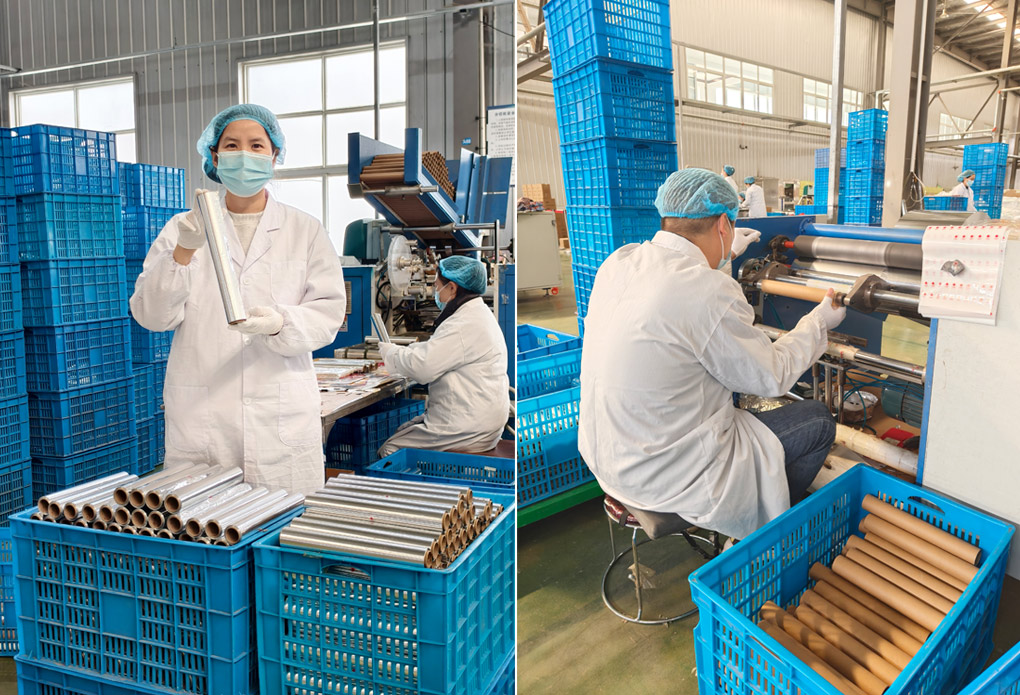
Zhengzhou Eming Aluminium Industry Co., Ltd. is a professional aluminum foil rolls manufacturer, which have over 10 years of experience in aluminum foil manufacturing and export. We work with customers in different markets, including importers, wholesalers, distributors, and private-label brands, to provide aluminum foil products that meet their specific business needs.
We understand that every market has different requirements for foil thickness, roll length, core weight, packaging design, and product specifications. That is why we offer customized solutions based on your requirements, helping you find the right balance between product quality, packaging, and cost.
As a manufacturer, we aim to provide high-quality aluminum foil products at competitive factory-direct prices. We believe that transparent quotations, clear product specifications, and consistent quality are essential to building long-term business relationships.
Whether you are sourcing household aluminum foil rolls, catering foil, or customized aluminum foil products for your own brand, our team is ready to discuss your requirements and provide a suitable quotation.
WhatsApp: +8619138193376
Email: eming@emingfoil.com
Related Products